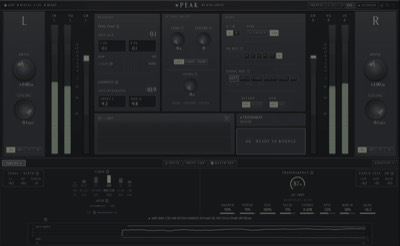
Limiting · v3.0.26
PEAK
A limiter for the mix bus and the master: set the ceiling once, then push the drive into it.
Open →$39 →
A limiter is the last thing in the chain and the one with the least room to hide. Its job is to raise the level of a finished record and hold a ceiling, and every audible artefact it makes arrives on top of a mix that was already finished.
The ceiling that matters is not the one your DAW meter shows. Sample-peak metering reads the samples you have; the converter, and every lossy codec between you and a listener, reconstructs a continuous waveform that passes between those samples and routinely goes higher. A master that measures −0.1 dBFS on a sample meter can arrive at a listener several tenths of a dB into clipping.
That is what true-peak metering is for, and why oversampled limiting exists: measure and catch the inter-sample peaks before the codec finds them for you. The practical consequence is a ceiling set with intent rather than superstition.
The other half is what the limiter does to transients on the way. Every limiter trades density against attack. The useful question is not whether it is transparent, because none of them are at the settings people actually use. It is whether you can hear what it took, matched for level, before you commit.
The test that separates limiters is not a loudness war. Set the same integrated loudness on two of them, level-match the outputs to the decibel, and listen to the low mids and the cymbal decays. Then run the master through the codecs you actually ship to and meter the result. A limiter that measures clean on your desktop and clips after upload has not done its job, and you will not find that out from a sample-peak meter.
Every RTM plug-in runs a full 14-day trial with every feature unlocked and no card. An RTM account is required to activate; the trial needs no card. One-time purchase, 2 machines, no subscription. Updates are free for as long as we sell the plug-in.